
Canada Gazette, Part I, Volume 160, Number 33: Regulations Amending the Passenger Automobile and Light Truck Greenhouse Gas Emission Regulations
August 15, 2026
Statutory authority
Canadian Environmental Protection Act, 1999
Sponsoring departments
Department of the Environment
Department of Health
REGULATORY IMPACT ANALYSIS STATEMENT
(This statement is not part of the Regulations.)
Executive summary
Issues: The Passenger Automobile and Light Truck Greenhouse Gas Emission Regulations currently require that zero-emission vehicles represent at least 20% of new model year 2026 light-duty vehicles offered for sale, 60% for model year 2030, and 100% for model year 2035 and beyond. These requirements, known as the Electric Vehicle Availability Standard, would place financial pressure on automakers as they navigate evolving market and trade conditions in the North American market that could make compliance challenging, thus potentially putting the domestic automotive manufacturing sector, and vehicle supply in Canada, at risk. Additionally, a number of administrative amendments to Canada’s Passenger Automobile and Light Truck Greenhouse Gas Emission Regulations are required to ensure program continuity in Canada following the United States’ final rule to repeal all vehicle greenhouse gas emission performance standards.
Description: The proposed Regulations Amending the Passenger Automobile and Light Truck Greenhouse Gas Emission Regulations would repeal the zero-emission vehicle requirements. In addition, modifications of certain references would be made to ensure program continuity in response to the final rule published in the United States to repeal all vehicle greenhouse gas emission performance standards. Other minor administrative amendments would also be made.
Rationale: On February 5, 2026, the Prime Minister announced Canada’s Automotive Strategy to support the automotive industry. Repealing the zero-emission vehicle requirements would provide additional flexibility to Canadian manufacturers and importers that are facing economic challenges that were not anticipated when the current requirements were put into place in 2023. Repealing the Electric Vehicle Availability Standard is a necessary initial step in the transition to a revised regulatory approach that drives greenhouse gas emission reductions in a technology-neutral manner, while providing flexibility to the Canadian automotive industry in a time of significant economic uncertainty. As the zero-emission vehicle requirements are set to begin as of 2026, removing these requirements now would provide regulatory certainty for the industry with regard to the repeal of the Electric Vehicle Availability Standard, while the Government works to develop enhanced greenhouse gas emission standards that put Canada on a path to achieve a goal of 75% electric vehicle sales by 2035 and 90% by 2040, as announced in Canada’s Automotive Strategy.
The repeal of the Electric Vehicle Availability Standard is just one element of a broader Government electric vehicle policy, as announced in the Automotive Strategy. In total, the Government’s overall goal of reaching 90% electric vehicle sales in 2040 could achieve approximately 145 megatonnes of greenhouse gas emission reductions by 2050, based on current projections, compared to a scenario where zero-emission vehicle requirements are repealed, and greenhouse gas emission standards remain at 2026 levels. It is important to note that this is an illustrative example of electric vehicle uptake that achieves the Government’s 75% and 90% electric vehicle sales targets. Exact emission reductions attributable to future greenhouse gas emission standards would be assessed in a future analysis alongside their publication in the Canada Gazette.
In addition to the repeal of the Electric Vehicle Availability Standard and the intent to introduce Canada-unique greenhouse gas emission standards, the Automotive Strategy includes measures to accelerate investment in Canada’s auto manufacturing sector to incentivize clean technologies and electric vehicles. It also aims to strengthen consumer demand through the reintroduction of purchase incentives and measures to enhance the national electric vehicle charging network. This approach is expected to provide increased flexibility by allowing manufacturers to use a range of technologies to respond to consumer preferences in the near term, while driving greenhouse gas emission reductions and zero-emission vehicle adoption over time.
Cost-benefit statement: The repeal of the Electric Vehicle Availability Standard is estimated to result in fewer zero-emission vehicles on the market, and fewer of these vehicles purchased in Canada than what was expected under the Electric Vehicle Availability Standard. This would result in avoided costs to vehicle purchasers, who would no longer bear the higher upfront cost of a zero-emission vehicle, and the associated cost of installing an at-home charging unit. These avoided costs are estimated to be $57.6 billion from 2026 to 2050. Conversely, these same consumers would forgo fuel and vehicle maintenance savings that accrue from electric vehicle ownership. Forgone fuel savings are estimated at $53.8 billion over the same period; however, forgone vehicle maintenance savings have not been monetized in this analysis. These proposed Amendments would also be expected to result in net forgone greenhouse gas emission reductions of 326 megatonnes, valued at $94.2 billion in potential climate change-induced global damages, for a total net cost of $90.3 billion.
The Canadian automotive sector is a major economic driver, contributing approximately $16.8 billion to national gross domestic product in 2024.footnote 1 As one of the country’s largest manufacturing industries, it directly employs over 125 000 people and supports roughly 500 000 jobs in total (including parts suppliers and dealership networks). The Canadian automotive sector has faced several major historical economic shocks. Between 2007 and 2009, the industry lost 43 500 jobs, a 28.5% decline in the workforce due to the impact of the global financial crisis.footnote 2 Maintaining zero-emission vehicle requirements, when the capacity of the Canadian auto sector to adjust is compromised by the economic challenges it now faces, could also lead to contractions in sectoral gross domestic product and employment. Any reduction in the risk of job losses in the Canadian auto sector needs to be considered in evaluating the costs and benefits of repealing the Electric Vehicle Availability Standard.
Issues
The Passenger Automobile and Light Truck Greenhouse Gas Emission Regulations (hereafter referred to as the Regulations) currently require that zero-emission vehicles (ZEVs) represent at least 20% of new model year (MY) 2026 light-duty vehicles (LDVs) offered for sale, 60% for MY 2030, and 100% for MY 2035 and beyond; these requirements are known as the Electric Vehicle Availability Standard (EVAS). While the transition to ZEVs is a key part of Canada’s electrified future and crucial to achieve net-zero emissions by 2050, it is unfolding amid significant short-term economic uncertainty. Since finalizing EVAS, the broader ZEV landscape has changed, with the Incentives for Zero-Emission Vehicles (iZEV) program ending, and the United States (U.S.) reversing federal support for electric vehicles (EVs) and imposing high tariffs on vehicle production inputs such as steel and aluminum. This changing landscape has contributed to declining ZEV sales in Canada falling from about 14% in 2024 to about 9% in 2025.footnote 3 Under these circumstances, current ZEV requirements could create more pressure on automakers as they navigate uncertainties in an integrated North American vehicle market such as fluctuations in consumer demand, and evolving market and trade conditions. Such pressures could create near-term competitiveness challenges for Canadian automakers in the North American market, with potential implications for investment and employment in the sector. Shifting from a prescriptive approach to one that drives greenhouse gas (GHG) emission reductions in a technology-neutral manner, while still increasing ZEV sales over time, provides needed flexibility to Canadian automakers. Given that developing a Canada-unique approach to GHG standards is complex and requires extensive analysis and engagement with stakeholders, and that current ZEV requirements begin in 2026, timely regulatory action to remove ZEV requirements is required as an initial step to implementing more ambitious and sovereign GHG emission standards for LDVs.
Furthermore, a number of administrative amendments to the Regulations are required to ensure program continuity in Canada in response to the United States Environmental Protection Agency (U.S. EPA) final rule to repeal all vehicle GHG emission standards.
Background
Transportation is the second-largest source of GHG emissions in Canada. In 2024, 28% of total Canadian GHG emissions came from the transportation sector.footnote 4 In December 2015, Canada and its international partners reached the Paris Agreement, an accord intended to fight climate change and limit the global average temperature rise to well below two degrees Celsius (2 °C) and to pursue efforts to limit the temperature increase to 1.5 °C above pre-industrial levels. As part of its commitment under the Paris Agreement, Canada has a target of achieving net-zero emissions by 2050.
To achieve these goals, Canada has a suite of vehicle and engine emission regulations to reduce GHG emissions from the on-road transportation sector. The Regulations are made under the Canadian Environmental Protection Act, 1999 (CEPA) and apply to manufacturers and importers of vehicles into Canada. They were first published in the Canada Gazette,footnote 5 Part II, on October 13, 2010, and established GHG emission standards for new passenger cars and light-duty trucks beginning in MY 2011. They have since been amended, including through 2014 Amendmentsfootnote 6 that increased the stringency of the GHG emission standards and established progressively more stringent annual fleet average standards for MYs 2017 through 2025. In 2023, amendments to the Regulations were made to establish mandatory ZEV requirements for passenger cars and light-duty trucks offered for sale in Canada. The ZEV requirements begin for the 2026 model year, with a requirement that at least 20% of new MY 2026 LDVs offered for sale be ZEVs. The requirements increase annually to 60% for MY 2030 and 100% for MY 2035 and beyond. While the transition to ZEVs is a key part of Canada’s electrified future and crucial to achieve net-zero emissions by 2050, it is unfolding amid significant short-term economic uncertainty. Recent U.S. policy uncertainty could affect the affordability and availability of ZEVs in Canada given the integrated North American market.
In early 2025, the United States imposed a series of new and expanded tariffs on Canadian automobiles, auto parts, trucks, buses, and resources such as steel, aluminum, and copper. With over 90% of Canadian-made vehicles and 60% of Canadian-made parts exported to the United States, U.S. automotive tariffs are threatening Canada’s automotive manufacturing industry. Canada’s auto sector supports over 500 000 workers, contributes over $16 billion annually to Canada’s gross domestic product (GDP), and is one of the country’s largest export industries — with domestic production exceeding 1.2 million passenger vehicles in 2025. Since April 2025, Canadian-made vehicles have faced a 25% U.S. tariff on non-U.S. content (the value of U.S. content in autos that are compliant with the Canada-United States-Mexico Agreement [CUSMA] is exempt). This prompted Canada to respond with retaliatory tariffs on non-CUSMA-compliant U.S. vehicles. All these measures created significant uncertainty for the Canadian automotive industry. In the midst of this uncertainty, historical total ZEV sales fell from 14% of total new passenger vehicle sales in 2024 to just 9% of total new passenger vehicle sales in 2025. While EV sales continue to increase globally, with one in four new cars sold worldwide being electric in 2025 according to the International Energy Agency, Canada is part of a broader North American auto market that has witnessed slower adoption rates relative to other regional markets including Europe and Asia.footnote 7 To support the sector as it navigates the immediate challenges from U.S. trade actions while preparing for a zero-emissions future, on September 5, 2025, the Prime Minister announced that EVAS would undergo a 60-day review and the requirements for MY 2026 would be removed.
On February 5, 2026, the Prime Minister announced Canada’s Automotive Strategy, which included new measures to accelerate investment in Canada’s auto manufacturing sector to help the industry adapt, grow, and diversify to new markets, and to encourage investment in clean technologies and EVs. The Government announced its intent to strengthen domestic demand by making EVs more affordable through the reintroduction of purchase incentives and measures to enhance the national charging network. To complement this, Canada also announced action to reduce tariffs on a limited number of low-cost Chinese EVs. Additionally, the Government announced its intent to strengthen Canada’s LDV GHG emission standards and to put Canada on a path to achieve a goal of 75% EV sales by 2035 and 90% by 2040. The Prime Minister noted that these more stringent and sovereign GHG emissions standards would enable the Government to repeal EVAS, providing manufacturers more flexibility in the choice of technologies to lower their fleet emissions and respond to consumer preferences in the near term, while driving EV adoption over time.
Canada’s vehicle and engine emission regulations have historically been aligned with those of the U.S. EPA. In order to ensure efficient alignment with the U.S. EPA, incorporation by reference is used in the Canadian vehicle and engine emission regulations as a technique to integrate certain provisions from the Code of Federal Regulations, such as several emission standards and test procedures. However, on February 18, 2026, the U.S. EPA published its final rule to rescind the 2009 Endangerment Finding, the basis for regulating vehicle GHG emissions in the United States, and to repeal all GHG emission standards and related regulatory requirements for light-, medium-, and heavy-duty vehicles and engines, effective April 20, 2026.
Objective
The objective of the proposed Amendments is to remove ZEV requirements under the Regulations. This initial regulatory step needs to take place quickly to ensure certainty with respect to the existing EVAS, which begins in 2026. It will provide the Government with the time needed to develop and engage stakeholders on more stringent Canada-unique GHG standards to drive GHG emission reductions in a technology-neutral manner, while providing flexibility to the Canadian automotive industry in a time of significant economic uncertainty. The new GHG standards will be designed to put Canada on a path to achieve a goal of 75% EV sales by 2035 and 90% EV sales by 2040.
The proposed Amendments also include administrative changes needed to enable the continued operation of the Regulations following the U.S. Government’s repeal of all GHG emission standards and related regulatory requirements for light-, medium-, and heavy-duty vehicles and engines.
Description
EVAS requirements
The proposed Amendments would repeal all provisions related to the ZEV requirements that were introduced in 2023. Once the ZEV requirements are repealed, companies would no longer have obligations to comply with them, nor to calculate and report on compliance units or deficits for their fleets.
Administrative amendments
The proposed Amendments would modify all references to the U.S. EPA’s regulatory text in the Code of Federal Regulations to be static, referring to a version of the Code of Federal Regulations as it read prior to the U.S. EPA repeal. This would enable the test procedures and calculation methods designed for the GHG emission framework to be maintained in the Regulations.
Lastly, the proposed Amendments would correct certain references to the Code of Federal Regulations, as well as make other administrative changes to maintain the current regulatory framework, such as amendments to definitions and rounding provisions.
Regulatory development
Consultation
In 2025, Canada encountered significant short-term economic uncertainty resulting from U.S. tariffs and other factors that had a major impact on Canada’s automotive industry. In addition, in July 2025, the U.S. EPA announced a proposal to repeal their GHG emission regulations for vehicles and engines by rescinding their Endangerment Finding, adding regulatory uncertainty in Canada given the harmonized market. The U.S. Administration also removed incentives and policies for ZEVs. Furthermore, there was a decline in consumer ZEV sales due to a variety of factors. In this context, there was a recognition that it would be prudent to review the feasibility and sustainability of EVAS to ensure that it continued to reflect market realities, while also acknowledging that the transition to ZEVs is important for Canada’s long-term electrification and decarbonization efforts and the Canadian auto sector’s competitiveness in a global market increasingly shifting to ZEVs.
On September 5, 2025, the Prime Minister announced that amendments to EVAS would be made to remove the ZEV requirement for MY 2026 and launched a 60-day review of EVAS. The Department of the Environment (the Department) initiated consultations on EVAS and subsequently concluded the review on November 4, 2025.
The Department consulted with a variety of interested parties, including non-governmental organizations (NGOs), industry associations, automotive manufacturers, other government departments, Indigenous organizations, governments and modern treaty signatories, and provincial and territorial governments. Over 130 targeted stakeholders and Indigenous organizations, governments and modern treaty signatories were invited to meet bilaterally with the Department and to provide written submissions with their feedback. Over the course of the 60-day review, over 40 bilateral meetings were held between the Department and interested parties, and 42 written submissions were received. The Minister of the Environment (the Minister) also hosted four separate roundtable discussions with automotive manufacturer associations and NGOs.
Summary of feedback received
Overall, the Department received comments with divided opinions on whether EVAS should be repealed or modified. Stakeholders who provided recommendations on how to amend EVAS generally agreed that significant modifications were needed for it to remain feasible.
With the exception of companies that exclusively import EVs, manufacturers expressed a general preference for performance-based GHG standards over the mandatory ZEV regulatory requirements in EVAS. Several manufacturers recommended delaying EVAS to begin between 2028 and 2030. Other manufacturers suggested various modifications to EVAS, including changes to reduce the stringency of the annual ZEV regulatory requirements to match market conditions and consumer demand, removing the 100% requirement, adding credit considerations for conventional hybrid vehicles, and modifications to the existing credit program. Furthermore, a few manufacturers recommended there be harmonization between federal and provincial ZEV requirements. Industry associations expressed that the use of GHG emission standards that are technology-neutral to drive ZEV adoption is preferable to ZEV targets. They further noted that the ZEV targets in EVAS are unrealistic and unattainable due to low consumer demand, affordability challenges, insufficient infrastructure, and economic uncertainty associated with U.S. policies and tariffs. Industry associations have stated that unrealistic ZEV targets were also reducing traditional vehicles’ availability while increasing vehicle prices during a time when there were no purchase incentives. They mentioned that ZEV technology and adoption have fallen short of expectations.
Companies that exclusively import EVs expressed support for maintaining EVAS without additional delay, though they acknowledged that the 100% requirements for 2035 may not be appropriate. They noted that EVAS would ensure ZEV availability in Canada and long-term affordability, and advocated for regulatory certainty.
A Canadian general trade union noted that EVAS prioritizes EV sales over domestic production and industrial strategy, lacks incentives for Canadian automakers, and disproportionately benefits auto manufacturers that exclusively produce EVs without Canadian manufacturing or labour commitments in Canada. The union also noted that EVAS fails to sustain EV sales after the purchase incentives had been halted and is unlikely to influence the North American supply chains due to a smaller market share. The union recommended delaying EVAS until 2030.
NGOs provided a wide variety of input to help inform future regulatory actions. Some NGOs suggested that no changes to EVAS were needed and were opposed to delaying implementation, while others advocated for less stringent annual ZEV regulatory requirements. In addition to the mixed feedback surrounding the ZEV regulatory requirements, the input relating to which vehicles should receive ZEV compliance units and the appropriate number of units that could be generated was also varied. Approximately half of the NGOs noted opposition to including conventional hybrid EVs in the compliance unit program, while some others suggested those vehicles could be included with limited scope. Approximately half of the NGOs also expressed support for removing the 100% ZEV requirement, and some NGOs recommended changes to the cap for plug-in hybrid electric vehicles (PHEVs), such as removing the cap entirely or adjusting the stringency.
The majority of provinces and territories that provided their feedback supported reducing the stringency of EVAS, stating that affordability is an obstacle and more needs to be done to support charging infrastructure and grid readiness. Some of the provinces and territories voiced concerns regarding the feasibility of EVs in rural and remote communities. At the time this was written, British Columbia was reviewing their regulatory policy on ZEVs and Quebec had proposed an amendment to reduce the stringency of their ZEV regulation.
Two Indigenous governments provided their comments, sharing concerns about climate change while also identifying challenges related to implementing EVAS in northern and remote communities where electricity and charging infrastructure is less developed, travel distances are long, the cold climate affects battery performance, and where affordability is already a challenge. A third Indigenous government met with the Department to learn more about the Government’s announcement to repeal EVAS and introduce more stringent GHG emission performance standards.
During the 60-day review, stakeholders generally agreed that electrification of transportation is the future. Stakeholders also broadly acknowledged the importance of reducing GHG and air pollutant emissions to reach Canada’s objective of achieving net-zero emissions by 2050; however, they noted that the current EVAS requirements necessitate supportive measures to increase consumer demand, such as expanded charging infrastructure, purchase incentives, and greater consumer awareness. There was an overall acknowledgment of Canada’s current period of uncertainty with economic and policy challenges that are impacting ZEV adoption.
Stakeholder comments from the 60-day EVAS review were considered by the Department and, on February 5, 2026, the Prime Minister announced that the Government of Canada would introduce more stringent light-duty vehicle GHG emission standards that would put Canada on a path to achieve 75% EV sales by 2035 and 90% EV sales by 2040 — reducing Canada’s carbon footprint and securing Canada’s global leadership in clean energy. As part of this announcement, the Government indicated its intent to strengthen domestic demand by making EVs more affordable through the reintroduction of purchase incentives and measures to enhance the national charging network. These more stringent and sovereign GHG emission standards would be unique to Canada and allow for the Government’s repeal of EVAS. This approach would provide greater flexibility and allow manufacturers to use a wide array of technologies to meet the standards and respond to consumer preferences in the near-term, while driving EV adoption over time. The instrument choice section outlines various options considered by the Department.
Following the February announcement, the Department held informal bilateral discussions, upon request, with some stakeholders, including environmental non-governmental organizations, original equipment manufacturers (OEMs) and their associations. Stakeholders expressed an interest in understanding the Department’s proposed approach to future more stringent GHG emission standards, as announced in the Automotive Strategy. Industry stakeholders stressed the importance of immediately repealing EVAS, of addressing the costs of complying with future, more stringent GHG emission standards, and of engaging on future GHG emission standards to ensure they are feasible. NGOs expressed both the importance of strong GHG standards to minimize forgone emission reductions and associated health benefits in the absence of EVAS and a desire to engage on future GHG emission standards. The Department intends to conduct a separate consultation process on future more stringent GHG emission standards and will notify interested parties of the opportunity to provide feedback at that time.
Indigenous engagement, consultation and modern treaty obligations
As required by the Cabinet Directive on the Federal Approach to Modern Treaty Implementation, an assessment of modern treaty implications was conducted on the proposed Amendments. The assessment examined the geographic scope and subject matter of the proposed Amendments in relation to modern treaties in effect. The assessment identified that the proposed Amendments would require consultation with the Tsawwassen First Nation, as some manufacturers of LDVs are located on their modern treaty land. The assessment also identified potential impacts to modern treaty rights holders located in northern communities. As a result, engagement activities were undertaken prior to publication of the proposed Amendments to provide the opportunity for Tsawwassen First Nation and other Indigenous organizations, governments and modern treaty signatories to participate in the regulatory development process for this proposal.
In a meeting with the Department in December 2024, Tsawwassen First Nation confirmed that their members do not manufacture or import LDVs, and no comments were received during the 60-day review or following the announcement of the Government’s Automotive Strategy. Two Indigenous governments and modern treaty signatories located in northern communities provided comments during the 60-day review regarding their concerns about the specific challenges faced in northern and remote communities with regard to EVAS, and another Indigenous government inquired about the measures announced in the Government’s Automotive Strategy (see the “Consultation” section above). These three Indigenous governments expressed interest in receiving notice of the publication of the proposed Amendments in the Canada Gazette, Part I. All comments received were taken into consideration during the development of the regulatory proposal. The Department will inform Indigenous organizations, governments and modern treaty signatories of the publication of the proposed Amendments in the Canada Gazette, Part I, and invite them to submit comments.
The United Nations Declaration on the Rights of Indigenous Peoples (UN Declaration) is an international human rights instrument that sets out minimum standards for the survival, dignity and well-being of Indigenous peoples. Through the United Nations Declaration on the Rights of Indigenous Peoples Act, the Government of Canada is committed to taking effective measures, including legislative and policy measures, in consultation and cooperation with Indigenous peoples, to advance implementation of the UN Declaration. The proposed Amendments may contribute to the implementation of the UN Declaration by mitigating potential impacts for Indigenous peoples in the North that could have occurred under EVAS. In accordance with section 5.1 of the Inuit Nunangat Policy, Inuit Treaty Organizations were included in the distribution lists for engagement, inviting comments on this proposal.
Instrument choice
Since EVAS was published in December 2023, the broader ZEV landscape has changed considerably. The iZEV program,footnote 8 which has since been replaced by the Electric Vehicle Affordability Program (EVAP), ended in March 2025, the United States reversed federal support for EVs, and the U.S. EPA repealed all its on-road vehicle and engine GHG emission standards. This changing landscape contributed to ZEV sales in Canada falling from about 14% in 2024 to about 9% in 2025.footnote 9 In early 2026, ZEV sales began to rebound, with ZEVs representing about 10% of total vehicle sales, on average, from January to April, and March sales alone reaching about 12%footnote 10 after EVAP was introduced. However, this is still considerably lower than the EVAS requirement of 20% for the model year 2026 vehicles.
Under these circumstances, current ZEV requirements could create additional pressure on automakers as they navigate uncertainties in an integrated North American vehicle market such as recent changes in consumer demand, and evolving market and trade conditions. Such pressures could create near-term competitiveness challenges for Canadian automakers in the North American market, with potential implications for investment and employment in the sector.
These factors contributed to the Government’s decision to review EVAS in September 2025. To address these challenges, the following four potential options were considered: (1) maintaining the status quo; (2) repealing EVAS; (3) delaying or reducing the stringency of EVAS; or (4) repealing EVAS and introducing enhanced GHG emission standards. These options were evaluated in terms of meeting Canada’s environmental objectives while easing the compliance burden for the automotive industry as it navigates broader global trade shifts and economic uncertainty.
Maintaining the status quo would support Canada’s commitment to achieving net-zero emissions by 2050 and ensure continued progress toward environmental and public health objectives; however, maintaining the current stringency of ZEV requirements would limit the automotive industry’s ability to respond to economic uncertainty, including supply chain disruptions and international trade pressures such as tariffs. This could lead to increased production and input costs, amplifying financial strain on manufacturers and importers and could lead to higher vehicle prices for consumers.
Repealing EVAS and maintaining current MY 2026 GHG emission standards for future model years would provide regulatory flexibility to manufacturers and importers, allowing the automotive sector to determine the best available technology mix based on market demand and technological readiness. Although this approach could ease financial and operational pressures on automakers, and support near-term affordability, it would result in slower progress toward mitigating GHG emissions, leading to negative impacts on the environment and human health due to ongoing air pollution and climate effects. This could also impact Canada’s ability to meet its climate commitments.
Delaying or reducing the stringency of EVAS would provide some degree of regulatory certainty for the continued deployment of ZEVs while easing the compliance burden on industry; however, it may not provide regulated parties with sufficient flexibility to effectively adapt to unforeseen market pressures such as evolving trade conditions and supply chain disruptions.
Repealing EVAS and introducing enhanced GHG emission standards would provide a balanced approach that preserves some emission reductions while reducing the compliance burden, supporting industry competitiveness, and improving consumer affordability. Canada’s vehicle GHG emission standards have historically been aligned with those of the U.S. EPA; however, due to recent policy shifts in the United States, including the rescission of the GHG Endangerment Finding and resulting repeal of their vehicle GHG emission standards, Canada would need to chart an independent course with respect to addressing GHG emissions from the on-road transportation sector.
Replacing EVAS with more stringent Canada-unique GHG emission standards strikes a balance between economic and environmental objectives. Given that current EVAS requirements are scheduled to begin in model year 2026, timely regulatory action is required before legal compliance obligations take effect. Moving quickly to repeal EVAS would provide regulatory certainty to industry and is the first phase of planned regulatory work. Consistent with the 2026 Automotive Strategy, the Government is working to develop stronger GHG emission standards that would put Canada on a path to achieve goals of 75% EV sales by 2035, and 90% EV sales by 2040. Those GHG emission standards would be proposed through a future regulatory amendment.
Figure 1 below presents the trajectory of ZEV sales under EVAS; under a scenario where EVAS is repealed, and ZEV sales are driven by consumer demand and current GHG standards (flatlined at 2026 stringency). The figure also provides an illustrative example of what ZEV sales could look like under enhanced GHG standards that put Canada on a path to achieve 75% EV sales in 2035, and 90% in 2040.
Figure 1: Annual ZEV sales under various scenarios
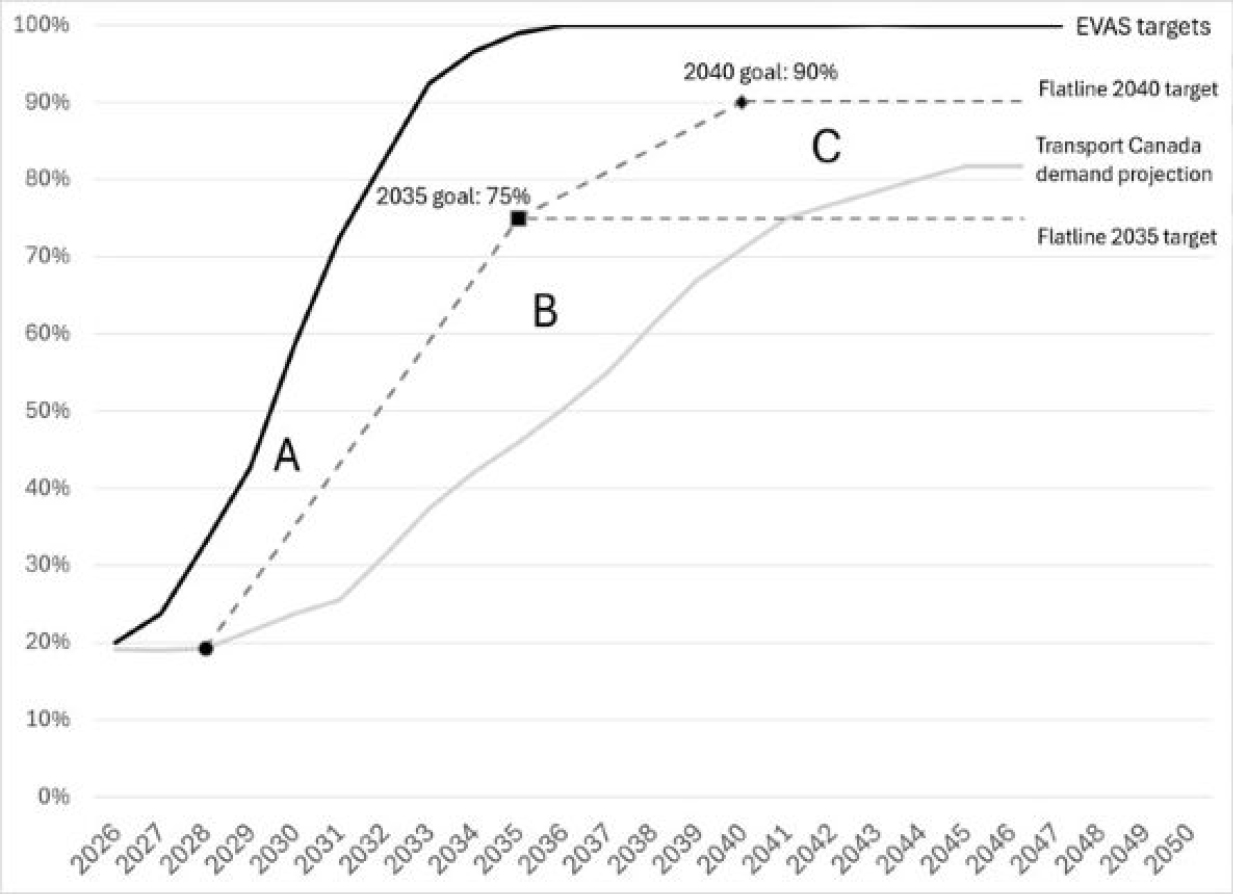
Figure 1: Annual ZEV sales under various scenarios - Text version
Figure 1 is a line graph that illustrates three trajectories of annual ZEV sales as a share of overall light-duty vehicle sales. The y-axis represents ZEV sales as a percentage of overall light-duty vehicle sales, ranging from zero to 100%. The x-axis represents the year, ranging from 2026 to 2050. There are three lines on the graph. The first line illustrates the expected trajectory of the share of ZEVs under the Electric Vehicle Availability Standard. This line begins at 20% and has a positive slope through to 2035, where it reaches 100%, and remains flat until 2050. The second line represents Transport Canada’s projection for ZEV sales driven by consumer demand in the absence of ZEV requirements. This line begins just below 20% in 2026, and increases more slowly than under the EVAS scenario, reaching just over 80% in 2050. The third line is an illustrative example of what ZEV sales could look like under enhanced GHG standards that put Canada on a path to achieve 75% EV sales in 2035, and 90% in 2040. This line increases linearly from about 20% in 2028 to 75% in 2035, and then 90% in 2040, after which it flatlines until 2050.
The area above the third line and below the first line is denoted as area “A”, the area above the second line and below the 75% target in the third line is denoted as area “B”, and the area above the second line and the 75% target, and below the 90% target in the third line is denoted as area “C”.
While the repeal of EVAS alone, represented by areas A plus B plus C, is estimated to result in 326 megatonnes (Mt) of forgone GHG emission reductions over the 2026 to 2050 period, the subsequent introduction of enhanced GHG emission standards in the near future could preserve approximately 145 Mt of these forgone reductions over the same period (areas B plus C). It is important to note that this is an illustrative example of ZEV uptake that achieves the Government’s 75% and 90% EV sales targets. Exact emission reductions attributable to future GHG emission standards would be assessed in a future analysis alongside their publication in the Canada Gazette.
| Changes in GHG emissions (Mt) | Area on figure | |
|---|---|---|
| EVAS repeal | −326 | A + B + C |
| 2035 target (75%) | 100 | B |
| Add: 2040 target (90%) | 45 | C |
The following cost-benefit analysis (CBA) presents the expected impact of the proposed Amendments where fewer ZEVs are sold relative to the status quo where EVAS is in place.
Regulatory analysis
Context
The proposed Amendments are part of the Automotive Strategy announced by the Prime Minister on February 5, 2026. Under this strategy, the Government is proposing to repeal EVAS and introduce stronger GHG emission standards, putting Canada on a path to achieve a goal of 75% EV sales by 2035 and 90% EV sales by 2040. Further, the Automotive Strategy includes measures to accelerate investment in Canada’s auto manufacturing sector to encourage investment in clean technologies and ZEVs, and to strengthen domestic demand by making ZEVs more affordable through the reintroduction of purchase incentives and measures to enhance the national charging network. This approach is expected to provide increased flexibility by allowing manufacturers to use a range of technologies to respond to consumer preferences in the near term, while driving GHG emission reductions and ZEV adoption over time.
Cost-benefit analysis summary
The proposed Amendments are estimated to result in fewer ZEVs purchased in Canada than what was expected under EVAS. This would result in avoided costs for vehicle purchasers who would no longer bear the higher upfront cost of a ZEV and the associated cost of installing an at-home charging unit. These avoided costs are estimated to be $57.6 billion from 2026 to 2050. These same consumers would forgo energy savings estimated at $53.8 billion over the same period. The proposed Amendments would also be expected to result in forgone GHG emission reductions of 326 Mt, valued at $94.2 billion in potential climate change-induced global damages, yielding a total net societal cost of $90.3 billion.
Analytical framework
The analysis compares the baseline scenario, which includes current Regulations (EVAS and current GHG emission standards), to a regulatory scenario where EVAS is repealed. To estimate the impact of the proposed Amendments, the analysis accounts for the main categories of expected incremental impacts: upfront vehicle and charger costs, energy usage, and GHG emissions. The analysis makes a simplifying assumption that vehicles for a given model year are sold in the same calendar year (i.e. MY 2028 vehicles are sold in calendar year 2028). The time frame for analysis is 25 years (2026 to 2050), which covers the period when the EVAS requirements would have begun (MY 2026) and reached full stringency (MY 2035), and then extends to 2050.
ZEV costs were estimated from published sources, such as Statistics Canada, the California Air Resources Board (CARB) and the U.S. EPA. Changes in annual net energy usage and GHG emissions were estimated using the output from the Department’s Energy, Emissions, and Economy Model for Canada (E3MC) from 2026 to 2050. The value of the changes in GHG emissions was calculated using the Department’s social cost of greenhouse gas (SC-GHG) emissions method. Air pollution emissions were quantified, but their health and environmental impacts were not quantified nor monetized and were only considered qualitatively. The incremental impacts were derived by comparing a baseline scenario to a regulatory scenario that reflects key aspects of the proposed Amendments. The central case analysis does not assess the impact of reaching the Government’s 2035 target of 75% of new vehicle sales being EVs. This is, however, considered as part of the sensitivity analysis.
Where sources used U.S. dollars, values were converted to Canadian dollars using 2024 purchasing power parity. All dollar figures are presented in 2024 Canadian prices, inflated using Canada’s GDP deflator from the Department’s 2025 Reference Case and discounted at 2% annually (to 2026) when presented in present value form. This is the discount rate now utilized by the Government of Canada when monetizing GHG impacts (more information on this approach is presented in the “Forgone greenhouse gas emission reductions” section).
Baseline scenario
The baseline scenario is based on projections from the Department’s 2025 Reference Case.footnote 11 These projections take into consideration current policies in place as of mid-2025, such as the ZEV regulations in Quebec and British Columbia, as well as the federal ZEV regulations (EVAS).
The baseline scenario reflects the trajectory of the ZEV requirements, which increase from 20% for MY2026 to 100% for MY2035 and beyond. The fleet average GHG emission standards in 2026 are assumed to have an overall fleet average value of 172 g/mile and remain constant through to 2050. The number of new passenger vehicles sold each year is derived using 2025 new vehicle sales data from Statistics Canada.footnote 12 In 2025, total new passenger vehicle sales were 1.9 million.footnote 13 Starting in 2026, this analysis assumes that new vehicle sales grow by approximately 1% per year, consistent with the population growth rate in the 2025 Departmental Reference Case.
Under the regulatory framework for EVAS, companies that go beyond their regulatory requirements would earn compliance unitsfootnote 14 that can be banked for future use or traded to other manufacturers, while those who fall short of their regulatory requirements generate deficits which must be offset within a specified time frame. Further flexibilities are available, including partial compliance units for certain PHEVs, unit creation through contributing to the deployment of ZEV charging stations, and early compliance units for a portion of ZEV sales in 2024 and 2025. The analysis assumes there is no compliance unit banking or trading, that all ZEVs receive one full unit and does not consider how early or partial units might affect the type of ZEVs manufactured or imported by regulated companies. Therefore, the analysis assumes that all regulatory requirements in the baseline scenario are met fully through the uptake of ZEVs and that model year requirements would be met in their corresponding calendar year.
Regulatory scenario
The regulatory scenario reflects the repeal of the EVAS requirements. In this scenario, non-regulated ZEV demand is an estimate of future demand for ZEVs produced by Transport Canada and includes the recently announced EV incentive program (EVAP). Although various market dynamics, such as supply chain challenges and international levies, may cause supply to lag behind demand, this analysis assumes no such frictions. Therefore, the regulatory scenario reflects ZEV uptake consistent with modelled ZEV demand. Figure 2 shows the projected share of ZEV sales in the baseline and regulatory scenarios.
Figure 2: Projected annual share of ZEV sales in the baseline and regulatory scenarios
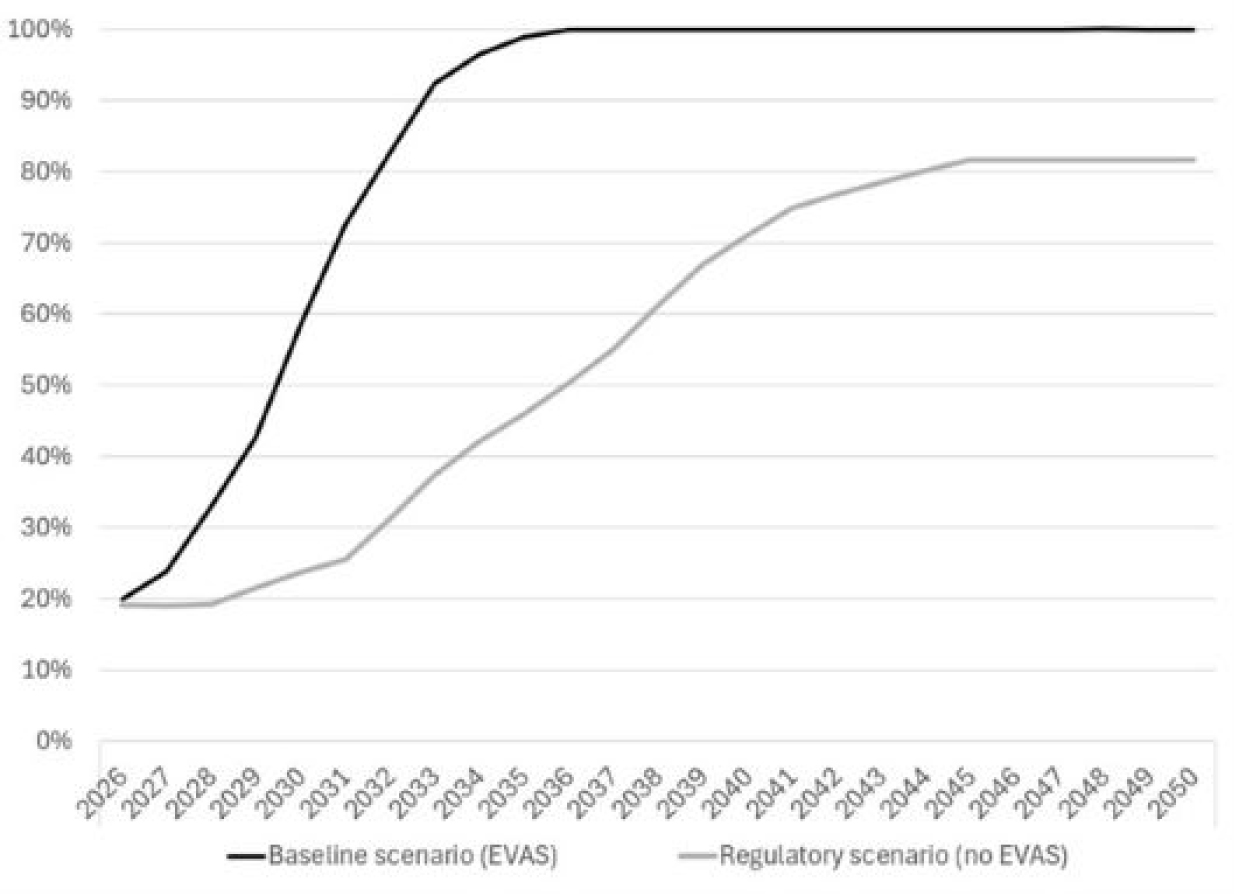
Figure 2: Projected annual share of ZEV sales in the baseline and regulatory scenarios - Text version
Figure 2 is a line graph that illustrates two trajectories of annual ZEV sales as a share of overall light-duty vehicle sales: one is denoted as the baseline scenario where EVAS is in place, and the other is denoted as the regulatory scenario where EVAS is repealed. The y-axis represents ZEV sales as a percentage of overall light-duty vehicle sales, ranging from zero to 100%. The x-axis represents the year, ranging from 2026 to 2050. There are two lines on the graph. The first line illustrates the expected trajectory of the share of ZEVs under the Electric Vehicle Availability Standard. This line begins at 20% and has a positive slope through to 2035, where it reaches 100%, and remains flat until 2050. The second line represents expected ZEV sales driven by consumer demand in the absence of ZEV requirements. This line begins just below 20% in 2026, and increases more slowly than under the EVAS scenario, reaching just over 80% in 2050.
Monetized (and quantified) benefits
Monetized benefits in this analysis represent the impact of repealing EVAS in terms of vehicle, charger and administrative cost savings.
Avoided costs of manufacturing ZEVs and home chargers
The analysis projects vehicle and at-home charging costs in the baseline and regulatory scenarios for manufacturing (or importing) ZEVs and installing more home chargers. To estimate future vehicle sales, 2025 vehicle sales data from Statistics Canada was projected using the population growth rate from the 2025 Departmental Reference Case, about 1% per year.
The proposed Amendments are expected to result in fewer ZEVs sold in the regulatory scenario, relative to the baseline scenario. Given the analytical framework described above, this would lead to avoided costs in both manufacturing ZEVs and purchases of home chargers. The analysis employs estimates for the incremental cost of switching between traditional gasoline-powered vehicles and four types of ZEVs: medium-sized battery electric vehicle (BEV) cars and BEV light trucks each with a 480 km all-electric range, and medium-sized PHEV cars and PHEV light trucks each with an 80 km all-electric range. Manufacturing cost differentials are assumed to be passed on to consumers through vehicle prices, though the cost differential between ZEVs and non-ZEVs is expected to decline over time. Therefore, avoided costs in this analysis are assumed to benefit consumers. Avoided incremental vehicle costs are adopted from the CARB reportfootnote 15 The report estimated the cost differentials through to 2035, after which this analysis holds the incremental prices constant. Adjusted to 2024 Canadian dollars, Table 2 below shows the incremental prices for ZEVs for select vehicle types in select years. Only battery electric cars are estimated to decrease in price over time such that they would be less expensive than their non-ZEV equivalents by 2033. The three other vehicle types are not expected to reach price parity with non-ZEVs equivalents during the analytical period. The avoided cost of manufacturing ZEVs is estimated to be $16.4 billion over the analytical period.
| Type of vehicle | 2026 | 2030 | 2035 |
|---|---|---|---|
| Battery electric cars | 3 550 | 1 050 | (850) |
| Battery electric light trucks | 7 700 | 3 700 | 705 |
| Plug-in hybrid electric cars | 4 250 | 3 400 | 2 750 |
| Plug-in hybrid electric light trucks | 6 150 | 4 850 | 3 850 |
The analysis assumes that ZEVs are sold with a cord compatible with a 120-volt plug; however, a report by the National Academy of Sciences (NAS) indicated that about 80% of ZEV consumers would purchase additional equipment to upgrade to a 240-volt plug and charger to increase the speed of at-home charging. With fewer ZEVs being purchased as a result of the proposed Amendments, fewer home charging units would be purchased as well. This would result in an avoided cost to households. The regulatory impact analysis for the U.S. EPA’s Multi-Pollutant Emissions Standards for Model Years 2027 and Later Light-Duty and Medium-Duty Vehicles estimated low-, mid-, and high-level costs for level 2 residential chargers for single-family and non-single-family homesfootnote 16. The analysis conducted for this proposal employs the U.S. EPA’s mid-level cost estimates and assumes an even split of single-family and non-single-family homes, based on 2021 census data that indicated approximately 53% of dwellings in Canada are single-detached homes.footnote 17 This results in an estimated average charger cost of approximately $4,160, which is then assumed to be a cost saving for 80% of the individuals who would no longer purchase a ZEV as a result of the proposed Amendments (as per the NAS report noted above). The avoided cost to consumers to purchase additional equipment for at-home charging is estimated to be $41.2 billion over the analytical period.
The avoided incremental costs of ZEVs and home chargers are estimated to be $57.6 billion in present value terms.
Avoided costs of reduced administrative requirements
The repeal of EVAS would result in avoided costs to manufacturers and importers who would no longer be required to conduct business related to the creation or trading of ZEV units. Annualized cost savings are estimated to be $0.1 million annually. Over the time frame of analysis, the avoided costs of these administrative requirements are estimated to be $2.8 million in present value terms. Details on these cost savings can be found in the “One-for-one rule” section.
Table 3: Monetized benefits (millions of dollars)
- Number of years: 25 (2026 to 2050)
- Price year: 2024
- Present value base year: 2026
- Discount rate: 2%
| Monetized benefits | Undiscounted — 2026 | Undiscounted — 2035 | Undiscounted — 2050 | Discounted — 2026 to 2050 | Annualized |
|---|---|---|---|---|---|
| Avoided ZEV costs | 51 | 856 | 18 | 16,406 | 840 |
| Avoided home charger costs | 40 | 3,661 | 1,417 | 41,201 | 2,110 |
| Avoided administrative costs | 0.1 | 0.1 | 0.1 | 2.8 | 0.1 |
| Total benefits | 92 | 4,516 | 1,436 | 57,610 | 2,951 |
Note: Totals may not add up due to rounding.
Monetized (and quantified) costs
Monetized costs in this analysis represent the impact of repealing EVAS in terms of forgone energy savings and GHG reductions.
Forgone net energy savings from ZEVs
As described above, the proposed Amendments are expected to result in a lower uptake of ZEVs over time, and since ZEVs are more energy efficient than their non-ZEV equivalents, this would result in households incurring increased energy costs associated with operating their vehicles. Electricity costs associated with charging ZEVs are estimated in this analysis through the use of the Department’s E3MC model. BEVs use only electricity, while the model assumes PHEVs operate using their battery 65% of the time, and gasoline the other 35%. E3MC provides projections on the quantity of electricity and liquid fuels demanded under each scenario, as well as energy price forecasts. The price of energy varies across Canada, and results from E3MC reflect these regional differences. The liquid fuel price projections included in the reference case are informed by the Canada Energy Regulator’s projections. This analysis assumes that all charging is conducted at home. The proposed Amendments are estimated to result in avoided electricity costs of $59.8 billion, which is expected to be offset by the increased spending on liquid fuels, estimated to be $113.6 billion. The estimated net increase in energy costs is thus $53.8 billion.
Figure 3 below shows the annual avoided cost of ZEVs, including home charger costs, relative to the net energy costs throughout the period of analysis. As shown below, the net societal energy costs would exceed total avoided upfront ZEV costs on an annual basis by 2038. These impacts are expected to be incurred by vehicle owners who would save on the upfront purchase cost of a vehicle but would then pay more in net energy costs.
Figure 3: Annual avoided costs of ZEVs and net energy costs (in millions of dollars)
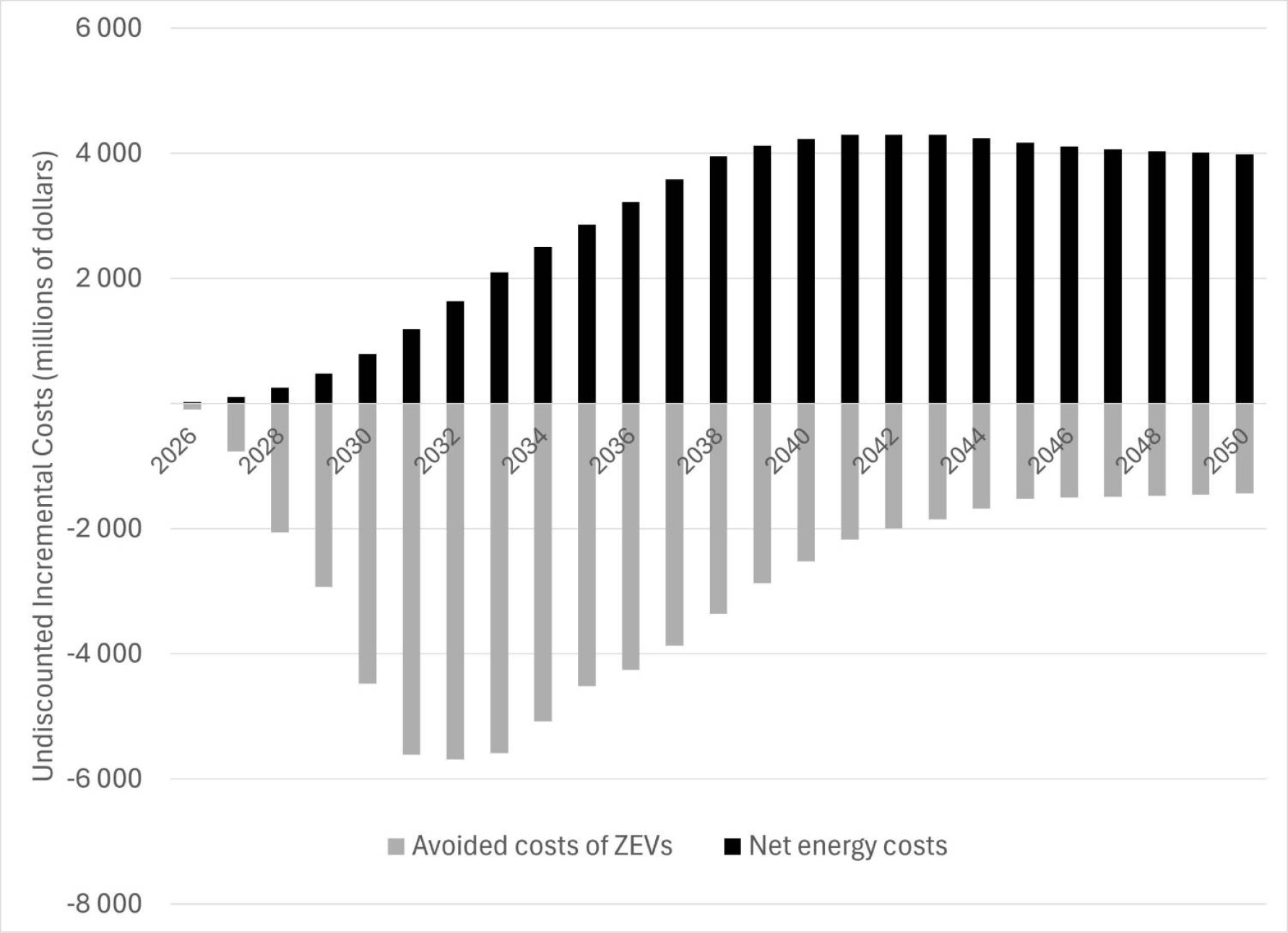
Figure 3: Annual avoided costs of ZEVs and net energy costs (in millions of dollars) - Text version
Figure 3 illustrates a bar graph. The y-axis represents incremental costs and cost savings, ranging from negative $8 billion to positive $6 billion. The x-axis represents the year, ranging from 2026 to 2050. Bars on the chart represent the estimated avoided cost of ZEVs and their chargers (denoted as negative values) and the forgone net energy savings associated with increased ZEV adoption (denoted as positive values). Costs of ZEVs and their chargers start at around $90 million in 2026, and then increase steadily until 2032 where they peak at roughly $5.7 billion. After this point, costs continually decrease year over year until 2050 when they end at roughly $1.4 billion. Net energy savings are roughly 25 million in 2026 but increase steadily over time until they peak in 2042 at around $4.3 billion, and then decrease slightly over time, ending at around $4.0 billion in 2050.
Forgone greenhouse gas emission reductions
As EVAS was expected to have significant GHG emission reductions in the transportation sector, repealing EVAS would result in those reductions becoming an opportunity cost, or loss in expected benefit. In total, over the 2026 to 2050 period, the repeal of EVAS is expected to result in approximately 326 Mt of forgone GHG emission reductions. The incremental impact of this scenario is represented by area “A” plus area “B” plus area “C” in Figure 1 in the “Instrument choice” section.
The proposed Amendments are a necessary initial step in the transition to an approach that drives GHG emission reductions in a technology-neutral manner and would provide regulatory certainty for the industry while the Government works to develop Canada-unique enhanced GHG emission standards. Future amendments to strengthen the GHG standards would mitigate some of these forgone GHG reductions. The sensitivity analysis provides an illustrative example of how future GHG emission standards could preserve some of the forgone reductions and what the impact of their introduction would be, relative to EVAS. To monetize the forgone GHG reductions attributable to the proposed Amendments, the quantity of forgone GHG emission reductions each year was multiplied by the Department’s schedule of the value of the social cost of carbon (SCC). In April 2023, the Department published its Social Cost of Greenhouse Gas Emissions — Interim Updated Guidance for the Government of Canada. The value of the SCC employed in this analysis and expressed in 2024 dollars is $309 per tonne in 2026 and increases to $443 in 2050. The resulting estimated present value of the 326 Mt forgone GHG emissions reductions is $94.2 billion over the 2026 to 2050 period of analysis.
| Monetized impacts | Undiscounted — 2026 | Undiscounted — 2035 | Undiscounted — 2050 | Discounted — 2026 to 2050 | Annualized |
|---|---|---|---|---|---|
| Forgone energy savings | 26 | 2,859 | 3,984 | 53,769 | 2,754 |
| Forgone GHG benefits | 3 | 4,459 | 8,033 | 94,190 | 4,824 |
| Total costs | 29 | 7,317 | 12,017 | 147,959 | 7,579 |
Note: Totals may not add up due to rounding.
Forgone air pollutant reductions
Non-ZEV LDVs are a significant source of air pollutant emissions, including fine particulate matter (PM2.5), nitrogen oxides (NOx), volatile organic compounds (VOCs), and carbon monoxide (CO), among other toxic substances. These air pollutant emissions may disproportionately impact children, elderly people, individuals with underlying health conditions and people living in high exposure areas.footnote 18,footnote 23
The proposed Amendments are expected to result in forgone health benefits to people in Canada, as fewer ZEVs would be offered for sale in the regulatory scenario than in the baseline scenario. The estimated increase in select pollutants from the proposed Amendments is quantified in Table 5 below as a percentage increase in pollutants.
| Type of air pollutants | 2026 | 2035 | 2050 |
|---|---|---|---|
| Particulate matter (PM2.5) | <1% | 9% | 19% |
| Nitrogen oxides | <1% | 20% | 98% |
| Volatile organic compounds | <1% | 24% | 112% |
| Carbon monoxide | <1% | 26% | 163% |
EVAS was expected to decrease air pollutants in the transportation sector significantly, particularly as the on-road LDV fleet would have become increasingly less emitting in later years. Therefore, the magnitude of the percentage increase in air pollutant emissions in the table above is due to the comparison with a baseline scenario that includes EVAS and thus would have had relatively lower air pollutant emissions when compared to the regulatory scenario.
Qualitative impacts
The analysis has only quantified certain impacts and monetized those most likely to contribute to the net impact in the cost-benefit analysis. Other impacts are considered qualitatively below, and impacts on industry competitiveness are described in the “Distributional analysis” section.
Qualitative benefits
Qualitative benefits are considered below in terms of the consumer welfare impact of vehicle choice, demand for electricity, and supply chain impacts.
Consumer welfare impact of vehicle choice
EVAS was expected to have a negative impact on consumer choice for consumers who prefer non-ZEVs. The proposed Amendments would thus be expected to improve consumer welfare by removing ZEV sales requirements and allowing industry the flexibility to use a range of technologies to respond to consumer preferences.
Demand for electricity
The proposed Amendments are expected to result in decreased ZEV electricity demand. ZEV electricity demand in 2035 is estimated to decrease from 6% of overall electricity demand with EVAS in place, to 3% under the proposed Amendments, and from 11% to 8% in 2050. This could alleviate some pressure on the electricity grid.
Supply chain impacts
The proposed Amendments would provide regulatory flexibility to firms by repealing the ZEV requirements. This flexibility is expected to benefit firms, as it allows them to adapt to changing market conditions and supply chain disruptions such as scarcity of critical minerals and battery acquisition.
Qualitative costs
Qualitative costs are considered below in terms of forgone maintenance cost savings, publicly available infrastructure, and forgone upstream emission reductions.
Forgone maintenance cost savings
Vehicle owners who would have purchased ZEVs as a result of EVAS would have been expected to benefit from maintenance cost savings over the operating life of these vehicles. Fully electric vehicles have fewer moving parts than non-fully electric vehicles, do not require oil changes or engine tune-ups, and do not contain spark plugs or engine air filters that may generally require replacement. A study by the U.S. Department of Energy estimates that electric vehicle ownership results in a two-cent maintenance cost saving per kilometre driven,footnote 19 which could result in estimated savings of $320 annually for a vehicle driven 16 000 km per year.footnote 20The proposed Amendments are expected to result in fewer ZEVs being sold; therefore, these maintenance cost savings would not be realized for consumers who would now opt for a non-ZEV.
Publicly available infrastructure
EVAS includes a compliance flexibility option that allows firms to create units by contributing to the deployment of ZEV charging infrastructure to meet a portion of their annual obligations. Repealing EVAS would also remove this incentive for firms to invest in such infrastructure. Although the proposed Amendments may result in fewer charging stations being deployed as a compliance strategy, this effect may be offset by the announcement that the Government will develop a national charging infrastructure strategy as part of the Automotive Strategy.footnote 21
Forgone upstream emissions reduction
The proposed Amendments are expected to lead to a decrease in battery and electricity demand, and a subsequent decrease in GHG emissions related to mining and electricity generation. The proposed Amendments are also expected to increase domestic demand for liquid fuels, and upstream emissions related to their extraction and production. Although this analysis does not quantify the impact of upstream emissions, a study looking at three regions in Canada with diverse carbon intensities in their electricity production found that PHEVs have significant well-to-wheel GHG emission reductions even in regions with electricity sectors that are relatively more carbon-intensive.footnote 22 Thus, the proposed Amendments would be expected to lead to forgone emission reductions from a well-to-wheel standpoint.
Summary of quantified and monetized cost-benefit analysis results
The proposed Amendments are estimated to result in fewer ZEVs sold in Canada than was expected to occur under EVAS. This would result in avoided costs to vehicle purchasers who would no longer bear the higher upfront cost of a ZEV and the associated cost of installing an at-home charging unit. These avoided costs are estimated to be $57.6 billion from 2026 to 2050. These same consumers would forgo energy savings estimated at $53.8 billion over the same period. The proposed Amendments are expected to result in forgone GHG emission reductions of 326 Mt, valued at $94.2 billion in potential climate change-induced global damages, for a total net societal cost of $90.3 billion, as shown in Table 6 below. Any future amendments to strengthen the GHG emission standards would be expected to mitigate some of these costs.
The proposed Amendments are also expected to result in forgone air pollutant emission reductions over the period. In 2050, PM2.5 emissions from LDVs are estimated to increase relative to a scenario with EVAS by 19%, nitrogen oxide emissions by 98%, volatile organic compound emissions by 112%, and carbon monoxide emissions by 163% (see Table 5 above). This is expected to result in diminished human health benefits. The value of these changes is not monetized in this analysis.
Table 6: Summary of monetized costs and benefits (millions of dollars)
Note: The table below shows a net benefit in the year 2026, as the benefit of avoided vehicle costs in that year is greater than the costs of forgone energy savings and GHG emissions. As fewer ZEVs are on the road throughout the time frame of analysis, these costs exceed benefits, resulting in net costs in the later years.
- Number of years: 25 (2026 to 2050)
- Price year: 2024
- Present value base year: 2026
- Discount rate: 2%
| Monetized impacts | Undiscounted — 2026 | Undiscounted — 2035 | Undiscounted — 2050 | Discounted — 2026 to 2050 | Annualized |
|---|---|---|---|---|---|
| Total benefits | 92 | 4,516 | 1,436 | 57,610 | 2,951 |
| Total costs | 29 | 7,317 | 12,017 | 147,959 | 7,579 |
| Total net benefits (costs) | 63 | (2,801) | (10,582) | (90,349) | (4,628) |
Uncertainty analysis
The estimated net cost could be higher or lower if all qualitative impacts were monetized, if the parameter estimates used in the calculation were higher or lower, or if an alternate time frame of analysis was adopted. Monetized values of the qualitative impacts are not considered to have significant impacts on the net cost estimate, while the impacts of alternative parameter estimates are considered in a sensitivity analysis below. Adopting an alternate time frame of analysis would be expected to change the magnitude of both costs and benefits but is not expected to change the net cost result of the analysis.
As shown in the table above, the proposed Amendments are estimated to result in a net cost to society, based on the evaluated parameters. However, potential impacts on the automotive industry which were not assessed in this CBA are instead explored in the “Competitiveness analysis” section below. It should also be noted that the proposed Amendments are one part of an Automotive Strategy that is intended to generate further benefits to Canadian society (see the “Context” section).
Sensitivity analysis of key CBA parameters
The monetized results presented in the CBA are based on key parameter estimates which could change with new information. To account for this, sensitivity analyses were conducted to assess the effect of higher or lower parameter values on the estimated conclusion (net cost) of the analysis. Parameter estimates are varied in isolation and in selected combinations. If this variation does not change the net cost conclusion of the analysis, the conclusion is not sensitive to the variable assessed. For the parameters assessed, the conclusion of net cost is only sensitive to a scenario with 50% higher cost savings and 50% lower forgone energy savings, which results in a net benefit estimate of $25 billion, as shown in table 7 below.
Cost of ZEVs
The central case employs cost estimates from CARB; however, there are various factors that may impact the future costs of a ZEV. For example, higher or faster technological advancement than is expected and economies of scale could lead to lower costs than projected. Similarly, reduced access to minerals, tariffs, and global supply chain issues could lead to higher costs than currently projected. To account for this potential variability, a sensitivity analysis was conducted that considers how the net impact of the proposed Amendments may be impacted by ZEV vehicle cost differentials that are 50% higher or lower than what is used in the central case. This range in possible upfront vehicle costs would create a range of net costs from $82.1 billion to $98.6 billion. As a result, the net cost conclusion of the analysis is not sensitive to this variable.
Home charger costs
The home charger costs used in the central case use the U.S. EPA analysis mid-level costs and assumes that 80% of all ZEV purchasers will upgrade their home charger to a level 2 charger. The future costs of home chargers and the proportion of individuals upgrading to a level 2 charger could vary. To account for this, a sensitivity analysis was conducted that considers the impact that 50% higher or lower home charger costs than projected would have on the effect of the proposed Amendments. This range in consumer behaviour and charger costs would create a range of net costs from $69.7 billion to $110.9 billion. The net cost conclusion of the analysis is not sensitive to this variable.
Liquid fuel prices
The projections for the cost of ethanol, gasoline, and diesel used in the central case come from E3MC. If future realized costs of liquid fuels are higher or lower than what is projected, then fuel costs would be impacted proportionately. A sensitivity analysis was conducted that considers the impact that 50% higher or lower fuel costs than projected would have on the net effect of the proposed Amendments. This range in the cost of liquid fuels would yield a range of net costs of $33.6 billion to $147.1 billion. Consequently, the net cost conclusion of the analysis is not sensitive to this variable.
Electricity prices
Similar to liquid fuels, electricity cost projections used in the central case come from E3MC. Differences in the price of electricity could occur from many factors; including the type of electricity generation and increased pressure on the grid. Electricity costs may be higher for consumers due to premiums being applied to the cost of electricity at publicly available charging stations, or they may be lower for consumers who would have taken advantage of peak-load pricing. Taking into consideration the potential for a 50% increase or decrease in projected electricity costs would lead to a range of net costs from $60.5 billion to $120.2 billion. As a result, the net cost conclusion of the analysis is not sensitive to this variable.
Discount rate
Canada’s Cost-Benefit Analysis Guide for Regulatory Proposals states that regulatory proposals relating to human health or environmental goods and services should employ a social discount rate. The central case reported in Table 6 employs a 2% social discount rate, which is the near-term Ramsey discount rate now utilized by the Government of Canada when monetizing GHG reductions. Sensitivity analyses were conducted using 1.5% and 2.5% discount rates, and their associated annual SCC values, to compare estimates. The SCC estimates used in this sensitivity analysis relevant to these discount rates can be found in the document entitled Social Cost of Greenhouse Gas Estimates — Interim Updated Guidance for the Government of Canada. The use of the 1.5% discount rate results in a net cost of $160.8 billion, and the use of the 2.5% discount rate results in a net cost of $51.8 billion. Thus, the net cost conclusion of the analysis is not sensitive to these alternate discount rates and SCC values.
Combined case scenarios
Two combined scenarios of variables were also considered. The worst-case scenario would see 50% lower vehicle and charger cost savings and 50% higher forgone energy costs. This results in a net cost conclusion of $205.8 billion. The best-case scenario would see 50% higher vehicle and charger cost savings, and 50% lower forgone energy costs. This results in a net benefits conclusion of $25.1 billion. The net conclusion of the proposed Amendments is thus sensitive to the combined best-case scenario.
Strategic firm behaviour
In the baseline scenario with EVAS in place, as annual percentages of new ZEV sales increase, fleet average GHG emissions would be projected to decrease, all else being equal. This would allow firms to consider what mix of non-ZEVs they sell and how much they could change non-ZEV efficiencies to meet overall fleet average standards. If firms choose to produce a less efficient non-ZEV fleet mix, or make non-ZEVs less efficient, they could be said to be partaking in strategic behaviour to reduce costs while meeting their obligations under EVAS and the GHG emission standards. The opportunities for firms to engage in this strategic behaviour are expected to decrease, as both GHG fleet average emission standards and percentage of ZEV sales increase because non-ZEVs become less attractive to consumers as their fuel efficiency worsens. When an illustrative case was modelled to present the potential impact of this strategic firm behaviour, the modelled fuel efficiency decreased by about 10%. This is because the consumer choice portion of E3MC has modelled consumers who optimize their technology preference based on the trade-off between costs and efficiency. This shows that, in the model, this strategic firm behaviour is limited due to consumers preferring transportation options with lower operating costs. This scenario would have lower forgone GHG benefits and energy savings, resulting in a net cost of $77.0 billion. Thus, the net cost conclusion of the analysis is not sensitive to this variable.
Future policy scenarios
The Government intends to introduce stronger GHG emission standards that put Canada on a path to achieve a goal of 75% EV sales by 2035. This scenario assumes that enhanced GHG standards are put into place starting in 2028 and increase until 2035 such that 75% ZEV sales would be achieved in that year if used as the compliance pathway of choice. This stringency is held constant post-2035. It is important to note that this is based on an illustrative example of ZEV uptake that achieves the Government’s target of 75% EV sales by 2035. Exact emission reductions attributable to future GHG emission standards would be assessed in a future analysis alongside their publication in the Canada Gazette. Under this illustrative scenario, it is estimated that achieving 75% EV sales by 2035 could preserve GHG emission reductions of approximately 100 Mt. Monetizing the full impacts of this scenario results in a lower net cost conclusion of $63.1 billion relative to the current EVAS policy. Further policies driving ZEV adoption, such as those aiming to achieve 90% EV sales by 2040, would be expected to mitigate forgone emission reductions even further, resulting in an even lower net cost.
| Variable | Sensitivity analysis case | Total net benefit (cost), $ billions |
|---|---|---|
| Central case | N/A | (90.3) |
| Higher ZEV cost differential | 50% higher | (82.1) |
| Lower ZEV cost differential | 50% lower | (98.6) |
| Higher home charger prices | 50% higher | (69.7) |
| Lower home charger prices | 50% lower | (110.9) |
| Higher liquid fuel prices | 50% higher | (147.1) |
| Lower liquid fuel prices | 50% lower | (33.6) |
| Higher electricity prices | 50% higher | (60.5) |
| Lower electricity prices | 50% lower | (120.2) |
| Higher discount rate (and associated SCC) | 2.5% | (51.8) |
| Lower discount rate (and associated SCC) | 1.5% | (160.8) |
| Combined scenario — worst-case | Lower ZEV costs, higher liquid fuel prices, lower electricity prices | (205.8) |
| Combined scenario — best-case | Higher ZEV costs, lower liquid fuel prices, higher electricity prices | 25.1 |
| Strategic firm behaviour | See text above | (77.0) |
| Future policy scenario | Include 75% by 2035 target | (63.1) |
Analytical limitations
The baseline scenario assumes that all manufacturers and importers would have fully complied with EVAS through the deployment of ZEVs; however, given current market uncertainties for the auto sector, using only ZEVs to comply could be challenging for some firms. Additionally, if the cost of compliance in the baseline was higher than estimated in the CBA either due to higher ZEV costs, or because traded units are more expensive than estimated incremental costs of ZEVs, cost savings could be higher than estimated in the analysis above. These dynamics could result in a lower net-cost than estimated in the analysis above. Some of these potential cost impacts are discussed in the “Distributional analysis” section below.
Cost estimates for ZEVs used in this analysis were from a 2022 report. While they were inflated to 2024 dollars, the cost estimates may be an underestimate of current prices due to variability in the ZEV market since the report was published. The sensitivity analyses conducted above on cost of ZEVs attempt to demonstrate the potential variability in this cost.
At the same time, this analysis does not use a life cycle model that could take into account other impacts of the proposed Amendments, particularly in terms of changes in upstream GHG emissions from decreased electricity generation and increased fossil fuel production. Nor does the analysis consider the costs that may be associated with changes in the mining of minerals for battery production and the end-of-life disposal of vehicles and their parts.
Emissions projections are subject to uncertainty and are most appropriately viewed as a range of plausible outcomes. Many of the events that shape emissions and energy markets cannot be anticipated. In addition, future developments in technologies, demographics and resources cannot be foreseen with certainty. The projection scenarios are derived from a series of plausible assumptions regarding, among others, population and economic growth, prices, demand and supply of energy, and the evolution of energy efficiency technologies.
Distributional analysis
The proposed Amendments are expected to ease the burden on industry as they navigate market uncertainties, such as tariffs. These impacts are explored in the “Competitiveness analysis” subsection below. Furthermore, the proposed Amendments could have disproportionate impacts on various subpopulations within Canada, as the costs and benefits are not expected to be evenly distributed. The forgone benefits associated with GHG emissions are global in nature, while the impacts on air pollution are experienced differently across Canada. The CBA estimates the incremental impact of a reduction in ZEV ownership, relative to EVAS. As these impacts are not distributed evenly in society, they are further discussed below in the “Gender-based analysis plus” subsection below.
Competitiveness impacts
The Canadian automotive sector is a major economic driver, contributing approximately $16.8 billion to national GDP in 2024.footnote 28 As one of the country’s largest manufacturing industries, it directly employs over 125 000 people and supports roughly 500 000 jobs total (including parts suppliers and dealership networks). The Canadian automotive sector has faced several major historical economic shocks. Between 2007 and 2009, the industry lost 43 500 jobs, a 28.5% decline in the workforce due to the impact of the global financial crisis.footnote 29 Maintaining EVAS requirements, when the capacity of the Canadian auto sector to adjust is compromised by the economic challenges it now faces, could negatively impact the sector, resulting in contractions in sectoral GDP and employment.
Approximately two million new vehicles are sold in Canada each year — roughly 12% are manufactured domestically, while the remainder are imported.footnote 24 Around half of these imports originate from the United States, which has historically been Canada’s primary trading partner. The U.S. Inflation Reduction Act resulted in significant investment in the U.S. auto manufacturing sector and it was estimated that by 2027, the United States would be capable of producing approximately 5.8 million new EVs.footnote 30 Following legislative shifts in late 2025, U.S. EV production capacity is now projected to reach 4.7 million units by 2028, while U.S. EV sales are estimated to be 3.2 million in 2030.footnote 31,footnote 32 While these estimates suggest there would be a sufficient supply of EVs for sale in Canada to meet EVAS targets, trade uncertainty has created risks for the Canadian auto sector.
Under EVAS, approximately 1.2 million ZEVs would be required to be offered for sale in Canada in 2030, which would represent a minimum estimated demand of 4.4 million EVs between Canada and the United States in that year. As EVAS would have become more stringent, Canada’s demand for ZEVs would have increased and production in both Canada and the United States might not have been sufficient to meet the total demand in North America. This might have led to importers having to rely more heavily on ZEVs originating from other jurisdictions or having to comply through other means (e.g. curtailing sales or buying a greater volume of more costly compliance units). Since EVAS obligations must be met by individual manufacturers and importers, there would likely be different impacts at the firm-level, where some firms may incur much higher costs to comply than others. The proposed Amendments seek to avoid these unintended economic consequences.
The preceding analysis of the CBA assumes that EVAS requirements in the baseline scenario would be met entirely through ZEV deployment. Under the Regulations, however, manufacturers and importers can also comply by earning units through investing in charging infrastructure, purchasing units from other manufacturers, using banked units from previous years, or carrying a deficit to be offset in future years. The pressures facing the sector make it more challenging to comply with EVAS via ZEV deployment alone and more likely that some firms would need to meet compliance obligations by investing in ZEV infrastructure (limited to satisfying up to 10% of compliance obligations in each model year between 2026 and 2030), lowering ZEV prices, or forgoing sales. This could impose significant financial burden on the sector that is already facing considerable challenges without necessarily generating direct GHG reductions.
As well, each OEM would face unique challenges in adjusting their fleet mix to meet the EVAS requirements, and this could create disproportionate economic costs. These disproportionate costs could impact profit margins, which, in turn, could impact employment in the Canadian auto sector. The proposed Amendments would alleviate some of this economic burden on industry, and thus avoid negative impacts of potential job losses attributable to EVAS.
Gender-based analysis plus
Affordability
It is expected that the proposed Amendments would ease near-term cost and supply pressures in the vehicle market, which could benefit consumers facing affordability constraints. As discussed above, non-ZEVs are generally less expensive than their ZEV equivalents. In the CBA, the incremental price for both BEVs and PHEVs is expected to fall over time, with BEV cars estimated to reach price parity with non-ZEVs in the early 2030s, while BEV pick-up trucks and sport utility vehicles, as well as PHEVs, are not expected to reach price parity before 2035. Allowing more affordable vehicles to continue to be sold would alleviate affordability concerns with the upfront cost of ZEVs. Purchasers of ZEVs are expected to realize ongoing operational savings compared to owners of similar non-ZEVs. These include energy and maintenance savings for the duration of ZEV ownership. These lifetime savings are generally expected to offset the initial price difference to purchase a ZEV versus a non-ZEV. Therefore, although vehicle buyers may avoid higher upfront costs associated with buying a ZEV under the proposed Amendments, they would also not realize the potential energy and maintenance savings associated with ZEV ownership.
Other considerations
Since the proposed Amendments are estimated to result in lower ZEV uptake, improvements in air quality are expected to occur more gradually and be lower overall. As a result, some populations, such as children, seniors, and individuals with pre-existing health conditions, who are more vulnerable to air pollution may continue to face adverse health impacts. Those who live near high-traffic areas, as well as lower-income households and renters, may also continue to bear health burdens associated with vehicle emissions.
In addition, repealing EVAS may help alleviate near-term cost pressures for automakers, supporting stability across the automotive sector. By providing relief in a time of economic uncertainty to the industry, the proposed Amendments may also contribute to improved worker well-being. Providing stability to the industry is expected to support automotive workers and may reduce financial stress, which can have negative effects on mental health outcomes.
Rural, remote, and northern communities may experience fewer immediate impacts from the proposed Amendments due to existing infrastructure constraints but could face longer-term delays in access to cleaner vehicle options.
Overall, although the proposed Amendments may provide short-term flexibility for industry and vehicle consumers, they could result in uneven outcomes across income, age, and regional groups.
Small business lens
Analysis under the small business lens concluded that the proposed Amendments would not impact Canadian small businesses.
One-for-one rule
The one-for-one rule applies, since there is an incremental decrease in administrative burden on business, and the proposed Amendments are considered an “out” under the rule, further supporting the Government’s Red Tape Reduction commitments. No regulatory titles are repealed or introduced.
Under the proposed Amendments, manufacturers and importers of new LDVs would no longer be subject to requirements to report annual proportions of vehicles offered for sale that must be ZEVs. The 2023 amendments identified 33 businesses carrying costs for the reporting requirements. While recent reporting shows 30 manufacturers and importers are reporting under the Regulations, the original figure of 33 is maintained in the one-for-one rule calculation of the burden “OUT” attributable to the proposed Amendments, as it reflects the administrative burden that was counted “IN” when the EVAS amendments were registered. Thus, 33 manufacturers and importers of LDVs are estimated here to have administrative cost savings associated with no longer being required to report on compliance associated with the ZEV sales targets. All avoided activities were assumed to be performed at a cost of labour of approximately $34/hour. Each stakeholder is assumed to avoid, on average, 80 hours annually compiling records and reporting administrative obligations, and 28 additional hours annually for administrative tasks related to unit trading, the charging station program and ongoing learning.
The net annualized avoided costs are estimated to be $44,750, or $1,350 per business.footnote 25
Regulatory cooperation and alignment
Amending the Regulations to provide increased flexibility to industry is in line with similar actions from British Columbia and Quebec, who announced reviews of their respective ZEV sales mandates in light of the challenges facing the automotive sector. In April 2026, British Columbia announced its intention to revise its 2035 goal for ZEV sales from 100% to 75% to align it with the federal government’s new ZEV goal, while maintaining incentives for public charging infrastructure.footnote 33 In June 2026, Quebec also proposed to lower its ZEV requirement for 2035 from 100% to 80%, thus no longer introducing a full ban on new internal combustion vehicle sales in 2035.footnote 26
The U.S. EPA finalized the repeal of their GHG regulations for vehicles and engines through their final rule: Rescission of the Greenhouse Gas Endangerment Finding and Motor Vehicle Greenhouse Gas Emission Standards Under the Clean Air Act. While Canada and the U.S. share a history of an aligned approach to regulating GHG emissions from on-road vehicles, Canada plans to maintain and strengthen its GHG emission regulations for light-duty vehicles. Canada-unique GHG emission standards would continue to support the trajectory of achieving Canada’s environmental objectives. Additional amendments would need to be made in a subsequent regulatory proposal to redesign the compliance framework for Canada in the absence of the U.S. EPA GHG emission program and related certification requirements.
Furthermore, while the regulatory structure is different, Canada’s proposal to provide increased flexibility to industry is in line with recent announcements in the European Union (EU). In December 2025, the EU published a proposal to ease interim ZEV requirements and expand compliance flexibilities for manufacturers,footnote 34 after announcing in 2023 that all new vehicles would need to be zero emission by 2035.
International obligations
As stated in the Climate Competitiveness Strategy in Budget 2025: the Government of Canada is committed to reducing GHG emissions and lowering carbon intensity in order to support international competitiveness and meet the growing demand from global markets for products with low associated greenhouse gas emissions.
Consistent with Canada’s obligation under the World Trade Organization Technical Barriers to Trade Agreement to provide notification of the publication of proposed technical regulations, the proposed Amendments are being published with a comment period of 75 days.
Effects on the environment
In accordance with the Cabinet Directive on Strategic Environmental and Economic Assessment, a comprehensive strategic environmental and economic assessment (SEEA) has been conducted. The SEEA concluded that the proposed Amendments would have a significant effect on the environment and human health, as they would result in forgone GHG and air pollutant emission reductions (see “Costs and Benefits” section above). This assessment does not account for the intent to further strengthen GHG standards to put Canada on a path to achieve a goal of 75% of EV sales by 2035 and 90% by 2040, as announced by the Government. The proposed Amendments are the first step in the Government’s announced strategy that intends to drive GHG emission reductions in a technology-neutral manner, while providing flexibility to the Canadian automotive industry in a time of significant economic uncertainty. The proposed amendments to repeal EVAS are projected to have a negative effect on the 2022–2026 Federal Sustainable Development Strategy (FSDS) Goal 13, which is to take action on climate change and its impacts, by increasing emissions; however, the introduction of future more stringent GHG standards could help to mitigate this effect.
Right to a healthy environment
In the administration of CEPA, the Government of Canada has a duty to protect the right to a heathy environment, as provided for under CEPA, subject to reasonable limits. An implementation framework (the Framework) sets out considerations to protect the right and uphold the principles described in the Framework.
With respect to the principle of non-regression, the Department has assessed the potential for the proposed Amendments to lead to a decrease in the level of environmental or human health protection. While the proposed Amendments are expected to result in increased emissions relative to EVAS remaining in effect, they are an initial step in the Government’s Automotive Strategy, which is expected to drive GHG emission reductions in a technology-neutral manner, while putting Canada on a path to achieve 75% EV sales in 2035, and 90% in 2040.
In developing the proposed Amendments, environmental, health and economic factors were considered (see the “Benefits and Costs” section). The Department considered environmental and human health objectives alongside significant economic pressures facing the automotive sector, including the impacts of U.S. tariffs on vehicles, steel, and aluminum, as well as the need to support domestic manufacturing competitiveness, investment in ZEV production, and market adoption. Economic and timing considerations were key factors informing the decision to repeal EVAS and were balanced with environmental and human health objectives to ensure that regulatory requirements remain feasible while driving ZEV adoption over time. While the proposed Amendments would result in reduced environmental benefits relative to EVAS remaining in effect, they are the first step in the Government’s announced plan to transition to a technology-neutral approach that is expected to continue to contribute to GHG emissions reductions over time.
Other elements of the Framework were also considered. The Department has consulted with interested parties, including Indigenous communities (see the “Consultation” section), and has considered the impacts of the proposed Amendments on populations that may be disproportionately impacted (see the “Gender-based analysis plus” section).
Implementation, compliance and enforcement, and service standards
Implementation
The proposed Amendments would come into force on the day on which they are registered. The Department will proactively communicate with known passenger automobile and light truck manufacturers and importers, as well as industry associations for these sectors, to ensure a maximum number of stakeholders are aware of the publication of the proposed Amendments.
Compliance and enforcement
Members of the regulated community would be responsible for ensuring that they are in compliance with the proposed Amendments, and for producing and maintaining evidence of conformity. The Department would continue to bilaterally engage with regulated parties to ensure they understand their reporting obligations and provide guidance on the reporting procedures, and responses would be provided to inquiries from stakeholders. The Department would continue to review and respond to submissions of evidence of conformity in a timely manner.
Implementation and enforcement actions would continue to be undertaken by the Department in accordance with the Compliance and Enforcement Policy for CEPA (the Policy).footnote 27 As the proposed Amendments would be made under CEPA, CEPA analysts and enforcement officers would apply the Policy when verifying compliance with the regulatory requirements. The Policy sets out the range of possible enforcement responses to alleged violations. Following an inspection or investigation, when an enforcement officer discovers an alleged violation, the officer would choose the appropriate enforcement action based on the Policy.
Contacts
Mark Cauchi
Director General
Energy and Transportation Directorate
Environment and Climate Change Canada
351 Saint-Joseph Boulevard
Gatineau, Quebec
K1A 0H3
Email: infovehiculeetmoteur-vehicleandengineinfo@ec.gc.ca
Matthew Watkinson
Executive Director
Economic Analysis Directorate
Environment and Climate Change Canada
351 Saint-Joseph Boulevard
Gatineau, Quebec
K1A 0H3
Email: ravd.darv@ec.gc.ca
PROPOSED REGULATORY TEXT
Notice is given, under subsection 332(1)footnote a of the Canadian Environmental Protection Act, 1999 footnote b, that the Governor in Council proposes to make the annexed Regulations Amending the Passenger Automobile and Light Truck Greenhouse Gas Emission Regulations under subsection 93(1)footnote c and sections 160footnote d, 162 and 326footnote e of that Act.
Any person may, within 75 days after the date of publication of this notice, file with the Minister of the Environment comments with respect to the proposed Regulations or, within 60 days after the date of publication of this notice, file with the Minister a notice of objection requesting that a board of review be established under section 333footnote f of that Act and stating the reasons for the objection. Persons filing comments are strongly encouraged to use the online commenting feature that is available on the Canada Gazette website. Persons filing comments by any other means, and persons filing a notice of objection, should cite the Canada Gazette, Part I, and the date of publication of this notice, and send the comments or notice of objection to Stéphane Couroux, Executive Director, Transportation Division, Environmental Protection Branch, Department of the Environment, 351 Saint-Joseph Boulevard, Gatineau, Quebec K1A 0H3 (email: infovehiculeetmoteur-vehicleandengineinfo@ec.gc.ca).
Please note that as part of the publication process, all representations, including attachments, will be published on the Canada Gazette website, subject to its terms of use relating to the provision of comments.
A person who provides information to the Minister may submit with the information a request for confidentiality under section 313(1)footnote g of that Act. The request for confidentiality must be submitted with reasons as required by subsection 313(2)footnote h of that Act.
Ottawa, August 6, 2026
Janna Rinaldi
Assistant Clerk of the Privy Council
Regulations Amending the Passenger Automobile and Light Truck Greenhouse Gas Emission Regulations
Amendments
1 (1) The definition zero-emission vehicle in subsection 1(1) of the Passenger Automobile and Light Truck Greenhouse Gas Emission Regulations footnote 35 is repealed.
(2) The definitions CFR and work truck in subsection 1(1) of the Regulations are replaced by the following:
- CFR
- means the Code of Federal Regulations of the United States as it read on June 18, 2024, unless otherwise provided in these Regulations. (CFR)
- work truck
- means a vehicle that has a GVWR that is greater than 3 856 kg (8,500 pounds) and less than or equal to 6 350 kg (14,000 pounds) and does not include a medium-duty passenger vehicle as defined in subsection 1(1) of the On-Road Vehicle and Engine Emission Regulations. (camion de travail)
(3) The portion of the definition automobile in subsection 1(1) of the Regulations before paragraph (a) is replaced by the following:
- automobile
- means any four-wheeled self-propelled vehicle that is designed for use on highways and that has a GVWR of less than 6 350 kg (14,000 pounds), except
(4) Paragraph (a) of the definition electric vehicle in subsection 1(1) of the Regulations is replaced by the following:
- (a) conforms to the emission standards of bin 0 set out in section 1811 of Title 40, chapter I, subchapter C, part 86, subpart S, of the CFR;
2 Section 2 of the Regulations is replaced by the following:
Purpose
2 The purpose of these Regulations is to reduce greenhouse gas emissions from passenger automobiles and light trucks by establishing emission standards and test procedures.
3 Section 3 of the Regulations is amended by adding “and” at the end of paragraph (c) and by repealing paragraphs (e) and (f).
4 Section 15 of the Regulations is replaced by the following:
Rounding — general
15 (1) The results of any of the calculations referred to in these Regulations, except for those referred to in subsections 17(4) and (5), section 18, subsections 18.1(1), (5) and (10), sections 18.2 and 18.3 and subsection 18.4(1), must be rounded to the nearest whole number in accordance with section 6 of the ASTM International method ASTM E29-93a, entitled Standard Practice for Using Significant Digits in Test Data to Determine Conformance with Specifications.
Rounding — nearest tenth of a unit
(2) The results of any of the calculations referred to in subsections 17(4) and (5), section 18, subsections 18.1(1), (5) and (10), sections 18.2 and 18.3 and subsection 18.4(1) must be rounded to the nearest tenth of a unit in accordance with section 6 of the method referred to in subsection (1).
5 (1) The description of A in subsection 17(3) of the Regulations is replaced by the following:
- A
- is the CO2 emission target value for each group of passenger automobiles or light trucks, determined in accordance with subsection (4) or (5), as the case may be, and expressed in grams of CO2 per mile;
(2) Subsections 17(4) to (8) of the Regulations are replaced by the following:
Target values — passenger automobiles of 2012 and subsequent model years
(4) For fleets of the 2012 model year and subsequent model years, the CO2 emission target value applicable to a group of passenger automobiles of a given model year corresponds to the following:
- (a) for each group of passenger automobiles with a footprint that is less than or equal to the low cutpoint, the CO2 emission target value is as set out in the applicable column in the table to this subsection for the model year in question;
- (b) for each group of passenger automobiles with a footprint that is greater than the low cutpoint and less than or equal to the high cutpoint, the CO2 emission target value is to be calculated using the formula set out in the applicable column in the table to this subsection for the model year in question; and
- (c) for each group of passenger automobiles with a footprint that is greater than the high cutpoint, the CO2 emission target value is as set out in the applicable column in the table to this subsection for the model year in question.
| Item | Model Year | Footprint Cutpoints (square feet) | CO2 Emission Target Value (grams/mile) | |||
|---|---|---|---|---|---|---|
| Low Cutpoint | High Cutpoint | Less than or equal to the Low Cutpoint | Greater than the low cutpoint and less than or equal to the High Cutpoint | Greater than High Cutpoint | ||
| 1 | 2012 | 41 | 56 | 244.0 | 4.72 × footprint + 50.5 | 315.0 |
| 2 | 2013 | 41 | 56 | 237.0 | 4.72 × footprint + 43.3 | 307.0 |
| 3 | 2014 | 41 | 56 | 228.0 | 4.72 × footprint + 34.8 | 299.0 |
| 4 | 2015 | 41 | 56 | 217.0 | 4.72 × footprint + 23.4 | 288.0 |
| 5 | 2016 | 41 | 56 | 206.0 | 4.72 × footprint + 12.7 | 277.0 |
| 6 | 2017 | 41 | 56 | 195.0 | 4.53 × footprint + 8.9 | 263.0 |
| 7 | 2018 | 41 | 56 | 185.0 | 4.35 × footprint + 6.5 | 250.0 |
| 8 | 2019 | 41 | 56 | 175.0 | 4.17 × footprint + 4.2 | 238.0 |
| 9 | 2020 | 41 | 56 | 166.0 | 4.01 × footprint + 1.9 | 226.0 |
| 10 | 2021 | 41 | 56 | 161.8 | 3.94 × footprint + 0.2 | 220.9 |
| 11 | 2022 | 41 | 56 | 159.0 | 3.88 × footprint − 0.1 | 217.3 |
| 12 | 2023 | 41 | 56 | 145.6 | 3.56 × footprint − 0.4 | 199.1 |
| 13 | 2024 | 41 | 56 | 138.6 | 3.39 × footprint − 0.4 | 189.5 |
| 14 | 2025 | 41 | 56 | 130.5 | 3.26 × footprint − 3.2 | 179.4 |
| 15 | 2026 and subsequent model years | 41 | 56 | 114.3 | 3.11 × footprint − 13.1 | 160.9 |
Target values — light trucks of 2012 and subsequent model years
(5) For fleets of the 2012 model year and subsequent model years, the CO2 emission target value applicable to a group of light trucks of a given model year corresponds to the following:
- (a) for each group of light trucks with a footprint that is less than or equal to the low cutpoint, the CO2 emission target value is as set out in the applicable column in the table to this subsection for the model year in question;
- (b) for each group of light trucks with a footprint that is greater than the low cutpoint and less than or equal to the high cutpoint, the CO2 emission target value is to be calculated using the formula set out in the applicable column in the table to this subsection for the model year in question; and
- (c) for each group of light trucks with a footprint that is greater than the high cutpoint, the CO2 emission target value is as set out in the applicable column in the table to this subsection for the model year in question.
| Item | Model Year | Footprint (square feet) | CO2 Emission Target Value (grams/mile) | |||
|---|---|---|---|---|---|---|
| Low Cutpoint | High Cutpoint | Less than or equal to the Low Cutpoint | Greater than the Low Cutpoint and less than or equal to the High Cutpoint | Greater than High Cutpoint | ||
| 1 | 2012 | 41 | 66.0 | 294.0 | 4.04 × footprint + 128.6 | 395.0 |
| 2 | 2013 | 41 | 66.0 | 284.0 | 4.04 × footprint + 118.7 | 385.0 |
| 3 | 2014 | 41 | 66.0 | 275.0 | 4.04 × footprint + 109.4 | 376.0 |
| 4 | 2015 | 41 | 66.0 | 261.0 | 4.04 × footprint + 95.1 | 362.0 |
| 5 | 2016 | 41 | 66.0 | 247.0 | 4.04 × footprint + 81.1 | 348.0 |
| 6 | 2017 | 41 | 50.7 | 238.0 | 4.87 × footprint + 38.3 | – |
| 7 | 2017 | 50.7 | 66.0 | – | 4.04 × footprint + 80.5 | 347.0 |
| 8 | 2018 | 41 | 60.2 | 227.0 | 4.76 × footprint + 31.6 | – |
| 9 | 2018 | 60.2 | 66.0 | – | 4.04 × footprint + 75.0 | 342.0 |
| 10 | 2019 | 41 | 66.4 | 220.0 | 4.68 × footprint + 27.7 | 339.0 |
| 11 | 2020 | 41 | 68.3 | 212.0 | 4.57 × footprint + 24.6 | 337.0 |
| 12 | 2021 | 41 | 68.3 | 206.5 | 4.51 × footprint + 21.5 | 329.4 |
| 13 | 2022 | 41 | 68.3 | 203.0 | 4.44 × footprint + 20.6 | 324.1 |
| 14 | 2023 | 41 | 74.0 | 181.1 | 3.97 × footprint + 18.4 | 312.1 |
| 15 | 2024 | 41 | 74.0 | 172.1 | 3.77 × footprint + 17.4 | 296.5 |
| 16 | 2025 | 41 | 74.0 | 159.3 | 3.58 × footprint + 12.5 | 277.4 |
| 17 | 2026 and subsequent model years | 41 | 74.0 | 141.8 | 3.41 × footprint + 1.9 | 254.4 |
6 (1) The portion of paragraph (b) of the description of A in subsection 18.1(2) of the Regulations before subparagraph (i) is replaced by the following:
- (b) in the case of plug-in hybrid electric vehicles, the value determined in accordance with section 116(c) of Title 40, chapter I, subchapter Q, part 600, subpart B, of the CFR for the model year in question and expressed in grams of CO2 equivalent per mile, taking into account subsection 19(2) and the following clarifications:
(2) Paragraph 18.1(10)(a) of the Regulations is replaced by the following:
- (a) in the case of electric vehicles, section 113(n)(1) of Title 40, chapter I, subchapter Q, part 600, subpart B, of the CFR as it read on February 28, 2022 — excluding the measure for the limited number of vehicles referred to in the description of CREE — except that the description of AVGUSUP in that section is equal to 0.210; and
(3) The portion of paragraph 18.1(10)(b) of the Regulations before subparagraph (i) is replaced by the following:
- (b) in the case of plug-in hybrid electric vehicles, section 113(n)(2) of Title 40, chapter I, subchapter Q, part 600, subpart B, of the CFR as it read on February 28, 2022, taking into account the following clarifications:
(4) Subparagraph 18.1(10)(b)(ii) of the Regulations is replaced by the following:
- (ii) the equivalent value in respect of the electricity grid for the electricity that is used to recharge the energy storage system is determined in accordance with section 113(n)(1) of Title 40, chapter I, subchapter Q, part 600, subpart B, of the CFR as it read on February 28, 2022 — excluding the measure for the limited number of vehicles referred to in the description of CREE — except that the description of AVGUSUP in that section is equal to 0.210.
7 (1) The descriptions of AR and BR in subsection 18.4(1) of the Regulations are replaced by the following:
- AR
- is the allowance for full-size pick-up trucks that achieve a certain carbon-related exhaust emission value, namely,
- (a) 10 grams of CO2 per mile for full-size pick-up trucks that achieve a carbon-related exhaust emission value that is less than or equal to their applicable target value, determined in accordance with subsection 17(5), multiplied by 0.85 and greater than their applicable target value multiplied by 0.8, or
- (b) 20 grams of CO2 per mile for full-size pick-up trucks that achieve a carbon-related exhaust emission value that is less than or equal to their applicable target value, determined in accordance with subsection 17(5), multiplied by 0.8;
- BR
- is the number of full-size pick-up trucks in the fleet that achieve a carbon-related exhaust emission value that is within the range referred to in paragraph (a) of the description of AR or that is less than or equal to their applicable target value, determined in accordance with subsection 17(5), multiplied by 0.8, as the case may be; and
(2) Subsection 18.4(2) of the Regulations is replaced by the following:
Allowance limitations — hybrid electric technologies
(2) The allowance for the use of hybrid electric technologies referred to in paragraphs (a) and (b) of the description of AH in subsection (1) may be calculated in respect of full-size pick-up trucks of a model year only if the percentage in the fleet of full-size pick-up trucks of that model year that are equipped with those technologies is equal to or greater than the percentage for that model year set out in section 1870(a)(1) or (2), depending on the technology used, of Title 40, chapter I, subchapter C, part 86, subpart S, of the CFR. The allowance referred to in paragraph (a) of the description of AH may be calculated only for full-size pick-up trucks of the 2017 to 2021 model years. The allowance referred to in paragraph (b) of the description of AH may be calculated only for full-size pick-up trucks of the 2017 to 2021, 2023 and 2024 model years.
(3) Subsection 18.4(3) of the Regulations is replaced by the following:
Allowance limitations — carbon-related exhaust emissions performance
(3) The allowance for full-size pick-up trucks that achieve a carbon-related exhaust emission value referred to in paragraphs (a) and (b) of the description of AR in subsection (1) may be calculated in respect of full-size pick-up trucks of a model year only if the percentage in the fleet of full-size pick-up trucks of that model year that achieve such a value is equal to or greater than the percentage for that model year set out in section 1870(b)(1) or (2), depending on the emission performance achieved, of Title 40, chapter I, subchapter C, part 86, subpart S, of the CFR. The allowance referred to in paragraph (a) of the description of AR may be calculated only for full-size pick-up trucks of the 2017 to 2021 model years. The allowance referred to in paragraph (b) of the description of AR may be calculated only for full-size pick-up trucks of the 2017 to 2021, 2023 and 2024 model years.
8 The headings before section 30.1 and sections 30.1 to 30.21 of the Regulations are repealed.
9 Subsections 33(4.1) to (5) of the Regulations are repealed.
Coming into Force
10 These Regulations come into force on the day on which they are registered.
Terms of use and Privacy notice
Terms of use
It is your responsibility to ensure that the comments you provide do not:
- contain personal information
- contain protected or classified information of the Government of Canada
- express or incite discrimination on the basis of race, sex, religion, sexual orientation or against any other group protected under the Canadian Human Rights Act or the Canadian Charter of Rights and Freedoms
- contain hateful, defamatory, or obscene language
- contain threatening, violent, intimidating or harassing language
- contain language contrary to any federal, provincial or territorial laws of Canada
- constitute impersonation, advertising or spam
- encourage or incite any criminal activity
- contain external links
- contain a language other than English or French
- otherwise violate this notice
The federal institution managing the proposed regulatory change retains the right to review and remove personal information, hate speech, or other information deemed inappropriate for public posting as listed above.
Confidential Business Information should only be posted in the specific Confidential Business Information text box. In general, Confidential Business Information includes information that (i) is not publicly available, (ii) is treated in a confidential manner by the person to whose business the information relates, and (iii) has actual or potential economic value to the person or their competitors because it is not publicly available and whose disclosure would result in financial loss to the person or a material gain to their competitors. Comments that you provide in the Confidential Business Information section that satisfy this description will not be made publicly available. The federal institution managing the proposed regulatory change retains the right to post the comment publicly if it is not deemed to be Confidential Business Information.
Your comments will be posted on the Canada Gazette website for public review. However, you have the right to submit your comments anonymously. If you choose to remain anonymous, your comments will be made public and attributed to an anonymous individual. No other information about you will be made publicly available.
Comments will remain posted on the Canada Gazette website for at least 10 years.
Please note that communication by email is not secure, if the attachment you wish to send contains sensitive information, please contact the departmental email to discuss ways in which you can transmit sensitive information.
Privacy notice
The information you provide is collected under the authority of the Financial Administration Act, the Department of Public Works and Government Services Act, the Canada–United States–Mexico Agreement Implementation Act,and applicable regulators’ enabling statutes for the purpose of collecting comments related to the proposed regulatory changes. Your comments and documents are collected for the purpose of increasing transparency in the regulatory process and making Government more accessible to Canadians.
Personal information submitted is collected, used, disclosed, retained, and protected from unauthorized persons and/or agencies pursuant to the provisions of the Privacy Act and the Privacy Regulations. Individual names that are submitted will not be posted online but will be kept for contact if needed. The names of organizations that submit comments will be posted online.
Submitted information, including personal information, will be accessible to Public Services and Procurement Canada, who is responsible for the Canada Gazette webpage, and the federal institution managing the proposed regulatory change.
You have the right of access to and correction of your personal information. To seek access or correction of your personal information, contact the Access to Information and Privacy (ATIP) Office of the federal institution managing the proposed regulatory change.
You have the right to file a complaint to the Privacy Commission of Canada regarding any federal institution’s handling of your personal information.
The personal information provided is included in Personal Information Bank PSU 938 Outreach Activities. Individuals requesting access to their personal information under the Privacy Act should submit their request to the appropriate regulator with sufficient information for that federal institution to retrieve their personal information. For individuals who choose to submit comments anonymously, requests for their information may not be reasonably retrievable by the government institution.